How the triage really works
Police resources follow harm. A hit-and-run with injuries — especially serious ones — gets investigative attention: canvasses, footage requests, paint analysis, database runs on partial plates. A clipped bumper in a Galleria lot gets a report number. That is not indifference. It is arithmetic. Knowing it tells you what to do next.
Riverside Police handle city streets. The California Highway Patrol handles the 91, the 60, and the 215. Same triage logic, different turf. CHP injury hit-and-runs on the freeway often have stronger dedicated resources. Report to whichever agency owns the road. They route it.
There is no honest published “catch rate” for this city. Anyone quoting one invented it. The pattern that is consistent everywhere: identification comes from cameras and witnesses in the first days far more than from later detective work.
What the report does even when nobody investigates
Three jobs. It satisfies the UM coverage condition — the reason to file same-day, every time. It timestamps the event for every insurer who later asks. And it puts your case in the system so a driver caught next month for something else can be connected to yours.
File it promptly regardless of what you expect it to trigger. The mechanics live in the 48-hour guide. A report that sits in a drawer still does civil work your silence cannot.
If a complaint is later filed, it is typically at the Hall of Justice downtown. Prosecutors and civil counsel read the same report. They use it for different burdens. A thin police file is not a thin civil file if you built the rest.
The canvass that actually finds drivers
Civic-grid hotels, Marketplace lots, Magnolia storefronts, residential doorbells along the flight path — footage exists for most urban hit-and-runs. It cycles in days, faster than triage moves. A same-week private canvass — you on day one, preservation letters behind you — recovers identification police would have found too late or never sought.
When a canvass produces a plate, hand it to the detective. Cases reopen for delivered evidence. Polite, specific, and prompt beats angry weekly voicemails with nothing new attached.
Your UM carrier investigates the claim — coverage conditions, damages — not the driver’s identity. Finding the driver after triage stalls is usually the victim’s side’s work.
What “call back and ask” should sound like
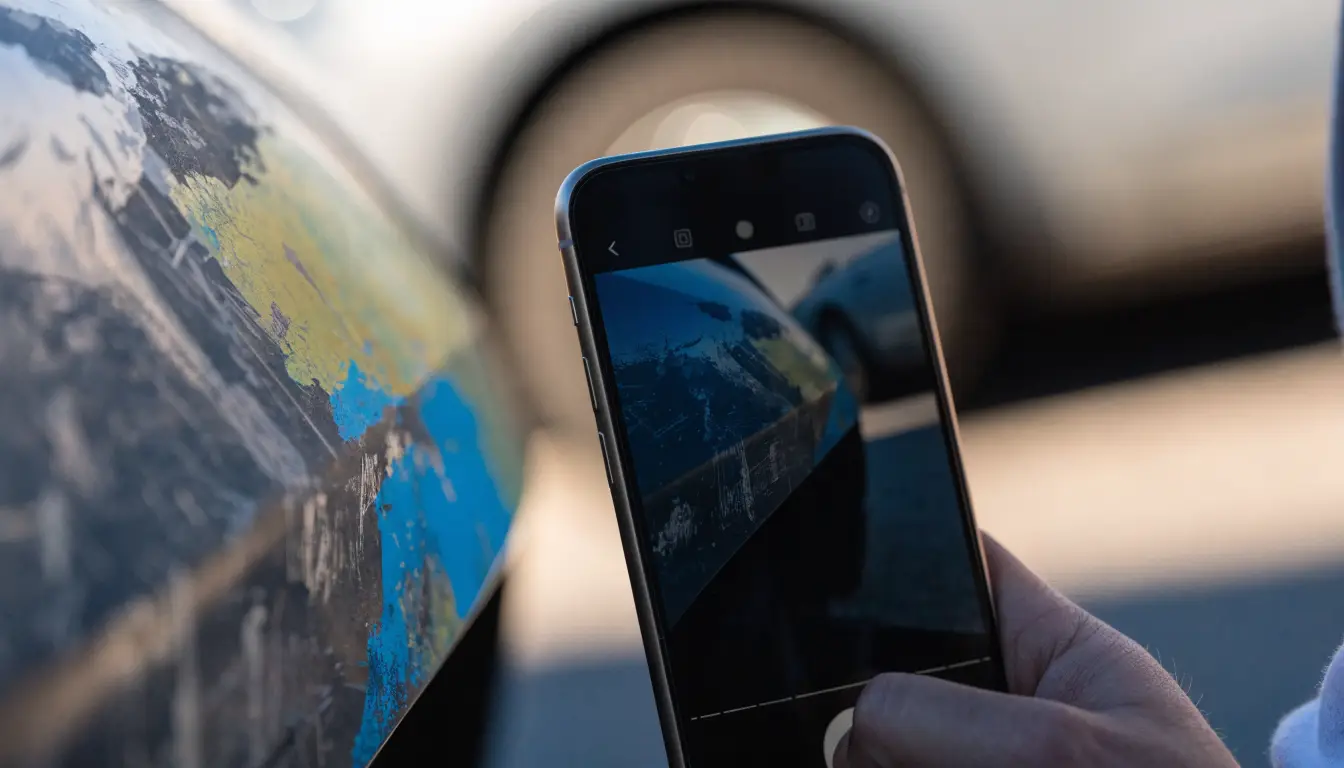
Have the report number. Have one new fact. “I found a camera at this address that faces the lot” is useful. “This is taking too long” is not. Detectives and report clerks in a county-seat agency hear volume. They move for evidence. If RPD has the city-street file and the flight entered the 91, ask whether CHP has a companion log. Agencies hand off. You should not assume the handoff included your photo of the paint transfer.
Property-only files still deserve the report. UM property coverage and the injury you have not felt yet both need that timestamp. If neck pain starts on day three, the report you filed on day zero is why the carrier cannot say the event was never documented.
Do not confront a suspected driver if a neighbor “thinks it was the gray truck on Chicago Avenue.” Hand the plate or the address to the detective and to counsel. Civil identification can proceed even when an officer is not ready to knock. Confrontations create new facts nobody needs.
Your claim’s next step is coverage and evidence, not a weekly status ritual. (909) 233-7999.
Sheriff’s deputies cover adjacent unincorporated ground — Woodcrest, Highgrove, pieces of the river side that people still call Riverside in conversation. If the crash was over the city line, the report may not be RPD’s. Getting the agency right is a ten-minute problem that prevents a two-month wait on the wrong clerk. The civil claim does not care which patch it was. The records request does.
Injury upgrades a triaged file. If you were “fine” on the report and then spent the night at RCH, call the report clerk and add the medical update. Detectives triage on harm. Harm that appears later should appear on the paper.
If you are told “no leads,” ask whether the plate-reader or freeway cameras were queried. CHP injury files sometimes have access that a city property-only report does not. A polite, specific question beats a complaint about staffing. Then build the UM file as if the answer is no. That is the file that pays either way.
Keep your own log: date you called, who you spoke with, what you delivered. When a case later reopens on a plate you found, that log is how you prove you were not sitting still. Detectives notice work. So do UM adjusters who claim you failed to cooperate.
And if nobody is ever found
The claim can still pay. Your UM coverage needs proof of the event, not a defendant. That is the quiet good news under this whole topic, and it is what a UM hit-and-run review in this city establishes in one call: what your policy owes, what the evidence supports, and whether the investigation matters to your recovery at all.
(909) 233-7999. No fee unless the case recovers.