The law, plainly
AB 51 wrote splitting into the Vehicle Code and tasked the California Motorcyclist Safety Program with safety guidance — modest speed differentials, when to hold your lane. The guidance is advice, not a crime. Riding outside it can feed a comparative-fault argument. Splitting itself is never the violation.
There is no posted “splitting speed limit.” Faster-than-guidance invites a percentage fight. It does not flip the crash to your fault. California’s pure comparative rule turns that fight into a discount, not a bar.
Out-of-state drivers on the 91 — the OC commute is full of them — drive under the law of the road they are on. Surprise is not a defense to an unchecked lane change.
The crash that defines these files
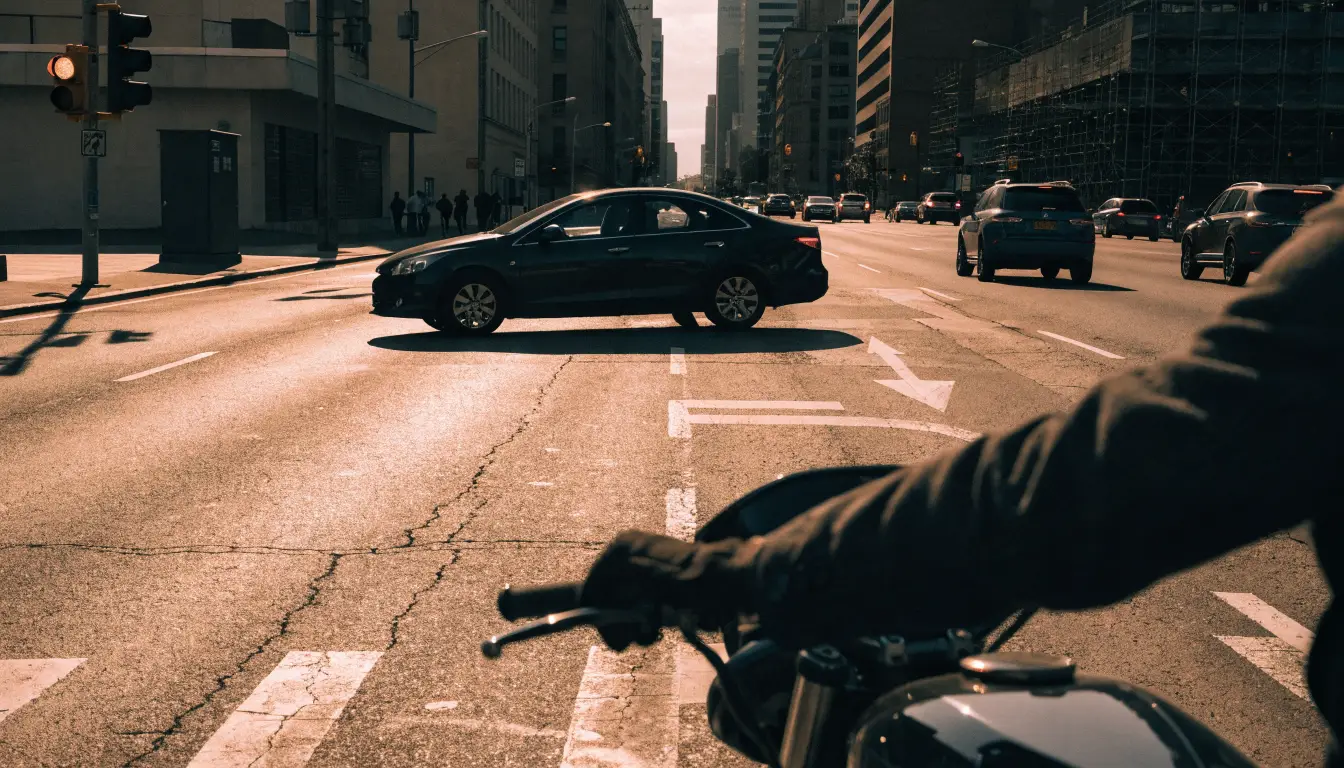
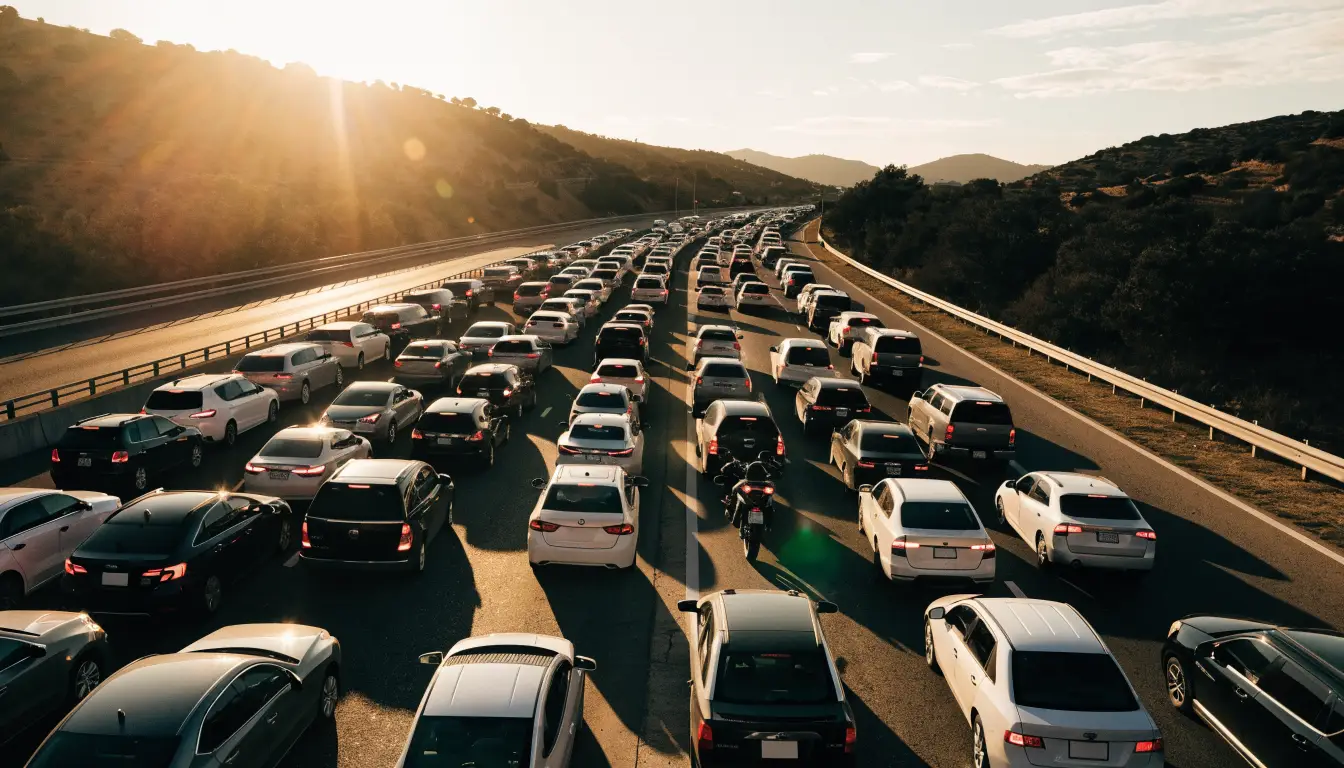
Hypothetical: a rider splits lawfully through stopped westbound 91 traffic heading toward Corona when a driver — bored in the weave, phone in hand — drifts into the gap. The driver’s duty to check before moving did not dissolve because the rider was between lanes. Fault sits where it always sits: on the unchecked movement.
The same pattern shows up on Magnolia in evening congestion and on Victoria Avenue when a driver drifts around the landscaped median without a shoulder check. Arterial splitting is legal too. The geometry changes. The duty does not.
“I never saw the bike” is not a defense. It is a description of the negligence. Drivers must see what is there to be seen before they move.
How insurers fight it anyway
Three moves. Call splitting reckless (it is legal). Inflate your speed (make them prove it). Lean on juror bias about riders (address it; do not fear it). A Hall of Justice jury has sat in the same 91 traffic. That cuts both ways. Prepared files treat bias as a fact to manage, not a reason to settle cheap on day ten.
The counters are physical. Crush and scrape patterns fix lane positions. Helmet-cam and dashcam footage ends arguments. CHP guidance becomes your exhibit when the riding fit it. Event-data from the car that drifted often shows no brake and a late steer — inattention, not a “sudden emergency.”
Preserve the bike and gear un-repaired until photographed. Pull your own footage immediately. Decline every speed-estimate question. “The physical evidence will show speeds” is a complete answer. The statute of limitations is still two years for most injury claims. The bike, the cameras, and the gear are a 30-day problem.
How splitting claims get built on these roads
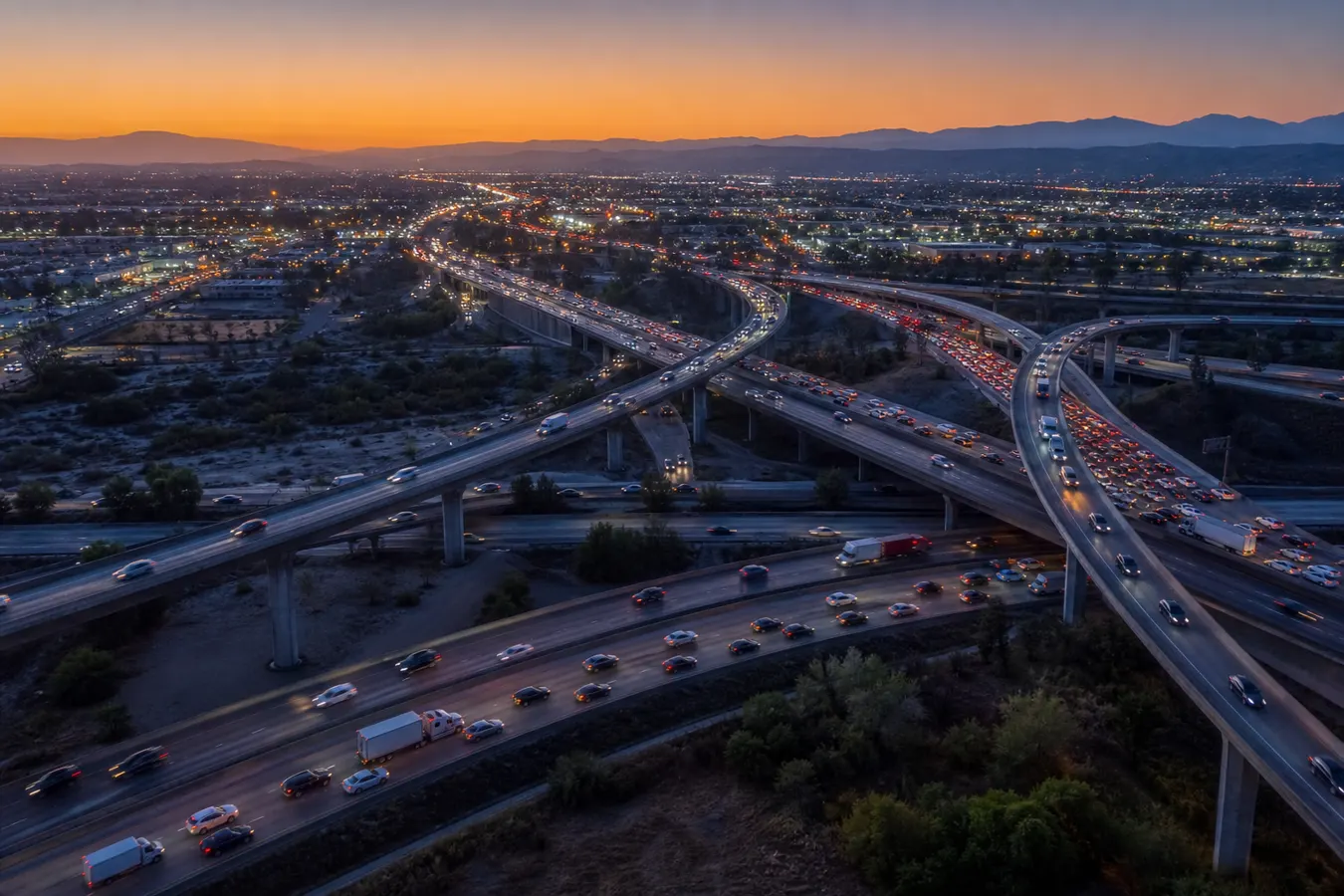
The 91 westbound toward Orange County is the commute that makes splitting rational — stopped lanes, heat, a long shoulder-to-shoulder crawl. That same crawl is where a bored driver drifts. Magnolia at rush hour is the arterial version. Victoria Avenue is slower and ceremonial, but a drift around the median is still a lane change without a check. Each road gives you a different photo list. The duty is the same.
Gear photos matter more than riders think. A scuffed helmet, a jacket with road rash through it, gloves that took the slide — those pictures answer two arguments at once: you were visible enough to be seen, and the injuries match a bike crash, not a “minor tap.” Take them before the gear hits the trash.
If a CHP officer wrote “lane splitting” in the narrative, that is a fact, not a citation for a crime. Read the rest of the narrative. Who moved first? Who had the gap? Bring the report to the consult instead of arguing with the officer’s adjective on the shoulder.
Week one: bike un-repaired, footage pulled, medical started. The law is already on your side. The file still has to be. (909) 233-7999.
Passengers on the motorcycle, if you had one, have their own claim and their own medical clock. Do not let the insurer fold them into your recorded statement. Riders hit by a commercial van or a rideshare car pick up a second policy. Those facts belong in the first consult, not in a later surprise. The splitting law does not change. The coverage stack does.
If you rode home, photograph the bike in the light the same day. Night photos on a 91 shoulder hide scrape height — the fact that often proves where you were between lanes.
Do not debate “safe splitting” with the adjuster. Debate lane position and who moved. Safety guidance is an exhibit when it helps you. It is not a confession when the other driver drifted. Keep those categories separate in every sentence you write.
After a splitting crash in this city
Get treated — RCH if EMS takes you there, Parkview or Kaiser if you walk in. Road rash and “I can ride it off” are how files get thinner. Report the crash. If it was on the freeway, the CHP report is the spine of the liability story.
The broader rider playbook is a motorcycle crash claim filed in this county. Left-turn crashes — a different statute, a different proof list — are covered in the left-turn guide. Value and timing are in the rider settlement timeline.
Free consult. No fee unless the case recovers. (909) 233-7999.