Why this east-side corridor writes the caseload
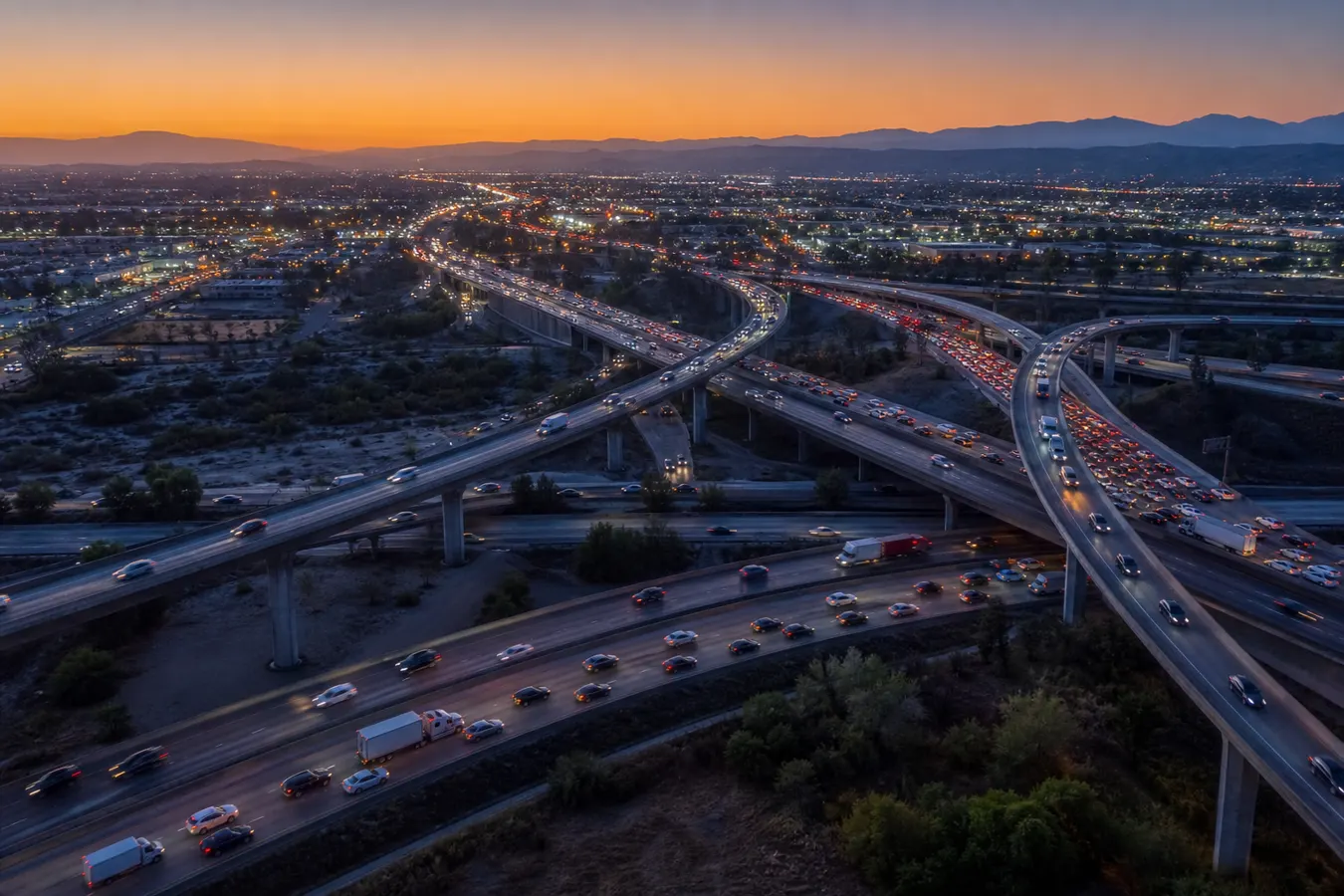
I-215 runs the city’s east side past UCR, Hunter Industrial Park, and the March ARB edge. Iowa Avenue, Columbia Avenue, and the industrial grid feed box trucks and semis onto that freeway. An 80,000-pound combination does not stop on a sedan’s distance. When the physics lose, the injuries land in the passenger vehicle and the fight moves to paper.
The records that actually decide it
Hours and ELD data (was the driver legal to be on the 215?). Telematics (speed, hard brake, following distance). Maintenance (were the brakes a file or a hope?). Hiring and dispatch. All of it is obtainable. All of it is perishable. The preservation letter is the time-sensitive document in this practice — not the demand letter six months later.
Who may share the claim
Often a stack: driver, motor carrier, broker, shipper, maintenance contractor — each with a policy. A hypothetical fatigued long-haul unit drifting through the Hunter / Iowa merge can implicate logs, dispatch pressure, and the last brake job. Stacking defendants is how serious truck files get paid, not by arguing with the driver in the cab.
Your first week
Photograph USDOT numbers, trailer IDs, and the scene. Get the CHP collision report if it was a freeway crash; Riverside PD if it stayed on the industrial streets. Then start commercial-truck claim work while the carrier is still writing its own version. What these files may settle for is covered in the truck settlement guide. The neighborhood-level version lives in Hunter Industrial Park truck crashes.